Introduction
Mastery of the Data Management discipline is an essential part of any digital transformation journey. It is part of being a data-driven organization and it is a pre-requisite for success in the exploitation of Artificial Intelligence.
Maturing advanced data and analytics capabilities — and putting the resulting insights to work through intelligent applications and processes — is the foundation of a data-driven organization.
1- What is Data Management?
Data management is a broad capability to process available data enterprise-wide and to derive business value from it by turning it into actionable insights. All within the framework of an overall digital business strategy and to support key digital transformation initiatives.
Data Management covers 10 disciplines as seen in this DAMA Wheel diagram, with Data Governance at the core. Note that in a typical programme the majority of these disciplines will be in scope to ensure no critical loopholes or project risks are created. An agile, incremental roadmap is devised based on current and target maturity levels, as assessed and scored using the CMMI framework.

a) Data Governance
Initiating or maturing Data Governance competencies and practices is a core discipline — a foundation for driving data management forward across an organization.
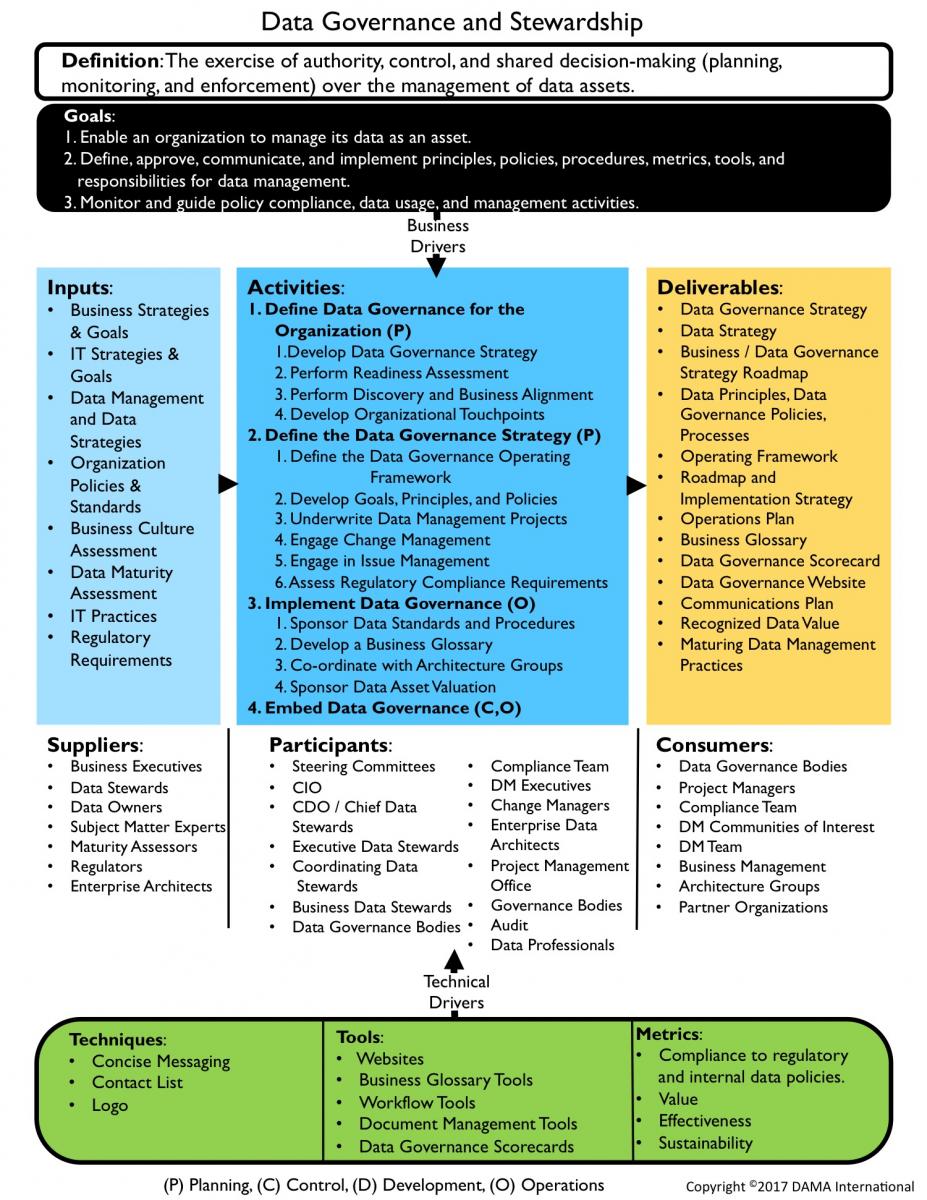
Data Governance emphasizes treating data as a corporate asset and ensuring data quality, security, privacy, and adequate accessibility for all business requirements. It is a fundamental capability to leverage data (the new oil) effectively and mitigate associated risks. Several data governance frameworks are available, and one (or a hybrid of several) can be adopted as the reference for best practices.
b) Data Architecture
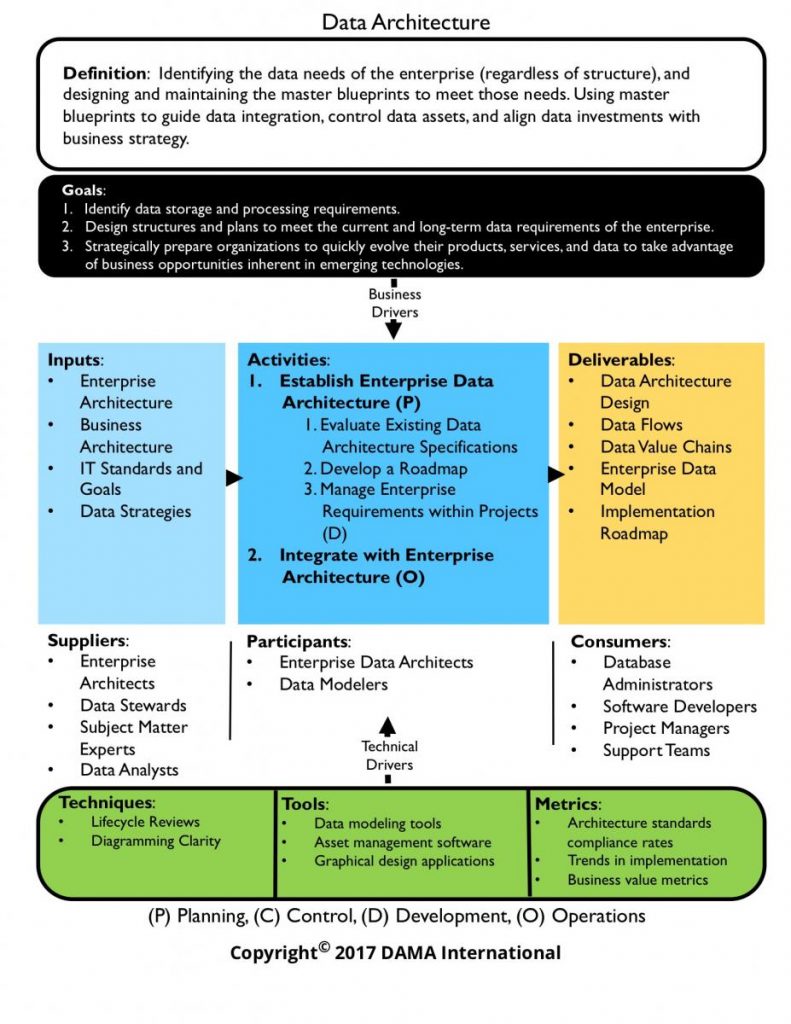
With data volumes and variety increasing, and with requirements for real-time data processing, a solid and modern data architecture is needed that can serve all business requirements and not become an impediment or a bottleneck in key business processes. This topic also includes best practices for data ingestion, storage, openness, and lifecycle management.
c) Data Warehousing and Business Intelligence
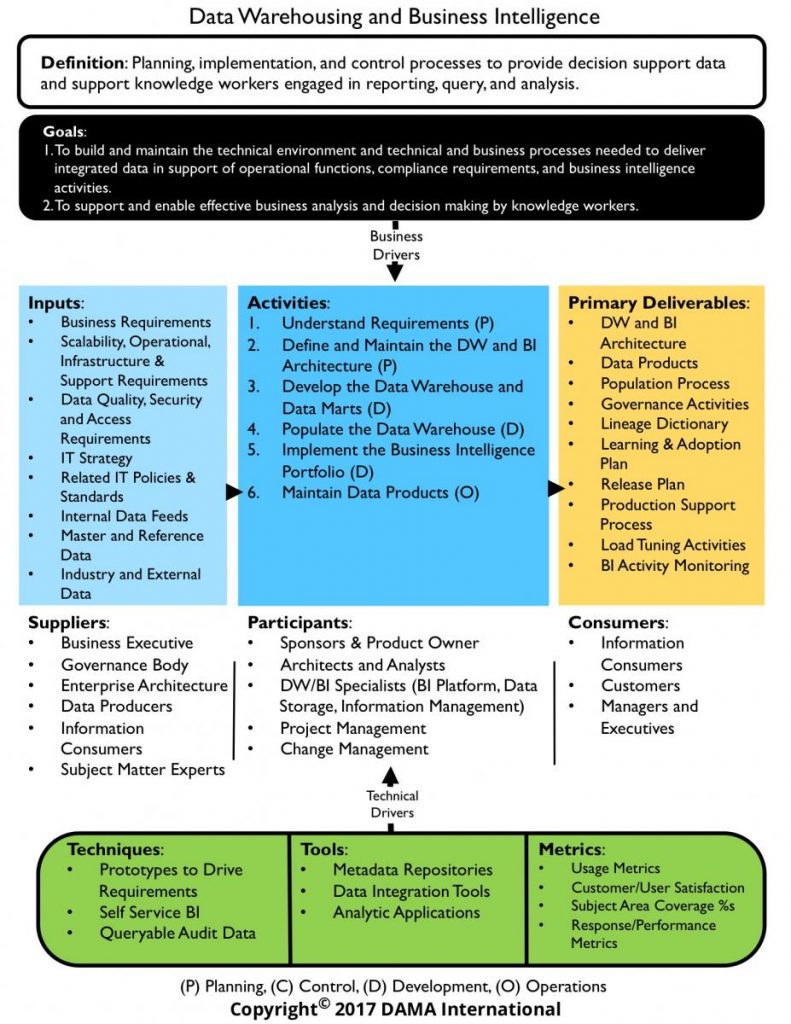
Data value is brought to the surface only when properly analyzed to derive relevant business insights. And these insights are best monetized if they are made actionable, meaning that the insight will help trigger a valuable action. At the lower end of the data analytics spectrum we find traditional BI reports. While at the upper end we have machine learning algorithms that are used to train machines to perform autonomous actions.
2- Smart Systems and Processes
Data management is a means to an end. The end is measurably smarter systems and processes that act on the insights the data provides — embedding those insights into core business processes and across the customer journey, so they become actionable, not merely reported.