End-to-End Digital Transformation — A Research-Based Methodology
Digital transformation is a broad headline. One strategic and basic theme within it is making an enterprise more data-driven, so it can better compete in this era of digital disruptors. They are masters of advanced data analytics — so sharper data capabilities matter: enriching data assets and then putting them to effective use, thereby extracting the most business value from this “new oil”.
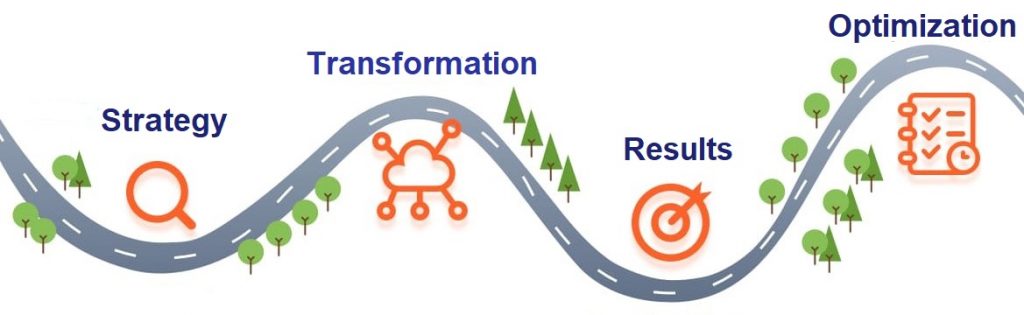
However digital transformation can’t be reduced to better data management only. It has many facets that should all align for success. This methodology covers the whole digital-transformation journey end-to-end, from “Strategy” to “Transformation Management” to “Optimization”.
1- Digital Strategy

The success of digital transformation is primarily based on a vision and strategy that is well adapted to the industry, market, technology, and capabilities of the organization. It should therefore start at the top-management level before drilling its way down the organization. The research-based approach is as follows:
- A comprehensive assessment (or existing assessments) of organizational maturity across the dimensions of Digital Capabilities, producing concise as-is reports that feed an overall digital SWOT analysis.
- Applicable frameworks and references** are leveraged to build on best practices and produce tailor-made insights and recommendations that help management see the full picture and form a solid business case.
- A custom Business Digital Transformation roadmap that is innovative yet agile for risk mitigation, maintaining business and IT alignment by starting with carefully picked pilots that can scale fast once safe to do so.
** Examples of applicable frameworks and references include the Capability Maturity Model Integration (CMMI), ISACA’s COBIT 5 and ITIL for IT Governance, ISO 8000 for Data Quality, and DAMA-DMBOK2 for overall Data Management. For specific industries, additional frameworks such as TMForum Frameworx may apply.
2- Transformation Management
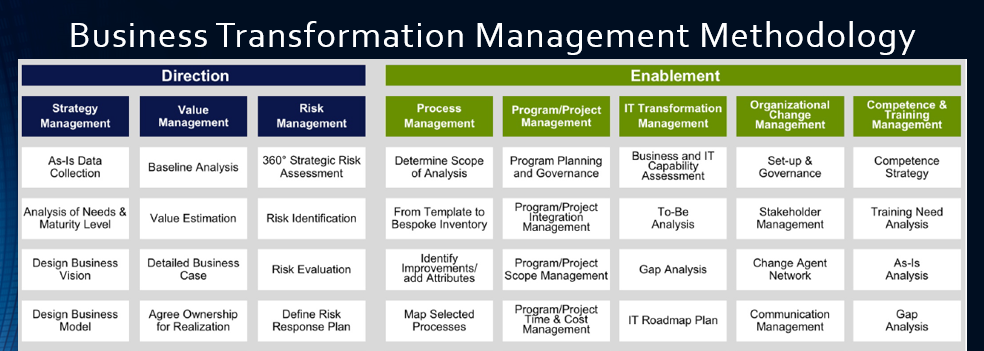
This phase draws on decades of hands-on experience managing large, complex programs and projects such as:
- The launch of large telecom operators with tight deadlines
- Implementation and integration of large scale software solutions
- Implementation of Data Warehouses with massive amounts of data
Effective management of the Digital Transformation roadmap controls the quality of delivery, with oversight of the overall program and a vendor-agnostic perspective.
3- Optimization
Enterprise architects, process engineers, and data scientists drive progressive maturity in mission-critical fields.
One example of optimization is building more solid capabilities in Data Management and Advanced Analytics — evaluating and improving the existing processes for data management and governance so that data quality and security are adequate and can support the evolution towards Big Data and AI.
See also: Data Management
